
Why was minor damage enough to write my car off?
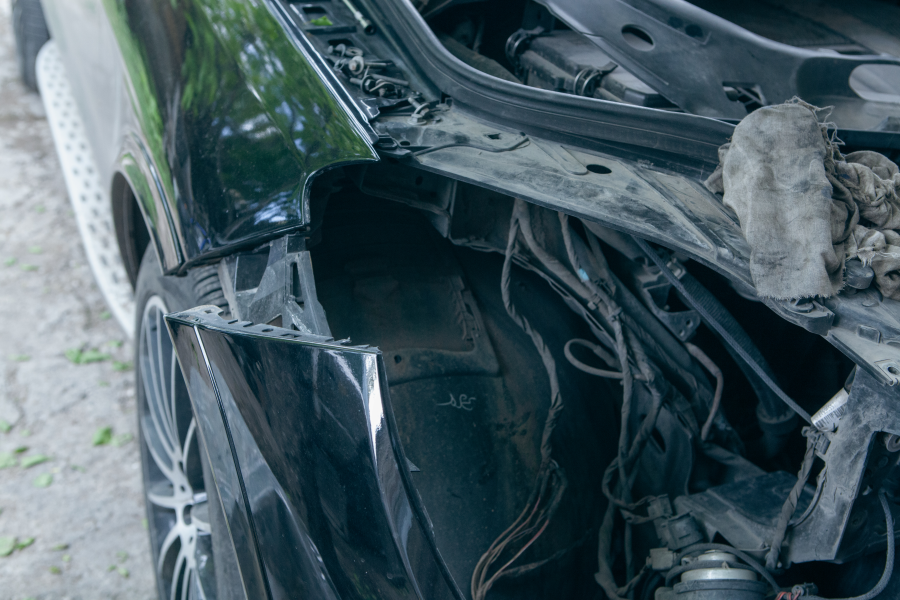
You've had an accident, but looking at the car, the damage doesn't seem too serious. Perhaps there's a dented wing, a cracked bumper or a broken light. Then your car insurance provider tells you the car is being written off.
It's understandable if that doesn't seem to add up. But being written off doesn't always mean your car is badly damaged or impossible to repair. Quite often, it's simply a financial decision.
Once you understand what the insurer is looking at, it usually makes a lot more sense.
A small-looking repair can become an expensive one
What you can see from the outside doesn't always tell you the full story.
Take a damaged bumper. Depending on the car, there may be sensors, cameras, wiring and other equipment behind it. There can also be damage underneath that isn't obvious until the bumper or surrounding parts are removed.
Then there's the cost of replacement parts, labour and paintwork. Some sensors and cameras may need checking or recalibrating after the repair too.
None of this necessarily means your car is seriously damaged. It simply means that what looks like a fairly small repair can cost more than you might expect.
The value of your car matters just as much as the damage
This is often the missing piece.
Imagine your car was worth around £4,000 before the accident and the full repair is expected to cost £3,000.
The car may be perfectly capable of being repaired. But from the insurer's point of view, spending almost as much as the car was worth to repair it may not make financial sense.
The same £3,000 repair on a much more valuable car could lead to a completely different decision.
That's why an older car can sometimes be written off after what appears to be a fairly minor accident.
It isn't necessarily a judgement on how badly damaged the car looks. It's about the cost of putting it right compared with what it was worth beforehand.
Modern cars can cost more to put right than you'd expect
Cars now have a lot of technology tucked away in places we don't really think about until something goes wrong.
A bumper might contain parking sensors. A windscreen or grille area might be connected with cameras or driver-assistance systems. Headlight units can contain sophisticated electronics.
If an accident affects any of these, the repair can involve more than simply replacing the visibly damaged part.
This is one reason you might look at your car and think, “Surely they can just fix that?” while the repair estimate tells a different story.
Does a write-off mean my car isn't safe?
Not necessarily.
Some written-off vehicles cannot return to the road. Others can be repaired.
If your car has been placed in Category S or Category N, it is considered repairable. Category S means there has been structural damage, while Category N means the damage is non-structural.
If you're trying to understand what those classifications mean for your options, our guide to selling a damaged car explains the different types of damage in more detail.
So hearing that your car has been “written off” doesn't automatically mean it's destined for the crusher.
It may simply mean your insurer has decided not to pay for the repair.
What if the insurer's valuation seems too low?
Because your car's pre-accident value plays such a big part in the decision, it's reasonable to question a valuation that seems unusually low.
Have a look at similar cars for sale, paying attention to the same model, age, mileage and specification.
If you think there's a meaningful difference between those prices and the insurer's valuation, you can ask how the figure was reached and provide evidence of comparable cars.
You don't have to understand every part of the insurer's calculation before asking them to explain it.
What happens to the car now?
In many cases, the insurer takes the written-off vehicle as part of settling the claim.
With some repairable write-offs, you may have the option of keeping the car instead. If you're thinking about doing this, speak to your insurer before everything is settled so you know what keeping it would mean for your claim.
And if you do keep it, you aren't committing yourself to repairing it.
You can find out what the repairs would involve and then decide whether you actually want to go ahead. If the repair bill leaves you wondering whether putting more money into the car makes sense, our guide to deciding whether to repair or sell a car can help you think it through.
You don't have to repair it for it to have value
This can be useful to know if you've ended up with the damaged car and aren't sure what to do next.
A written-off car isn't automatically worthless. Its make, model, age, condition and the type of damage can all affect what it's still worth.
If you've retained a repairable write-off but would rather not take on the repairs, you can sell your damaged car to Cash For Cars in its current condition.
There's no need to repair the car simply to find out what you could get for it.
Get a quote from Cash For Cars and see what your damaged car could be worth as it stands.